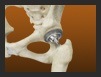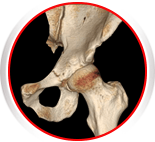
The pelvic ring is made up of three major bones:  the sacrum and two innominate bones.  The innominate bones are joined in the front by the symphysis pubis joint and the sacrum sits between the innominate bones in the back like a keystone.  The sacrum is joined to the innominate bones by the sacroiliac joints.  These three bones held together by strong ligaments form a butterfly shaped ring of bone, which protects internal organs and provides a structural support for walking.

Pelvic fractures are often the result of high-energy trauma such as car accidents and falls from heights.  Because the pelvis is a ring, fractures almost always occur in more than one place.  Usually there are fractures or joint dislocations in both the front and back, but both do not always require surgery.  In the most severe injuries, the two sides of the pelvis are completely separated from each other. 

Complications of pelvic and sacral fractures are severe internal bleeding, damage to internal organs and nerve injury.  Large blood vessels can be lacerated or torn by the injury to the pelvic ring and require specialized emergency treatment on arrival to the hospital.  The bladder and urethra are commonly injured with pelvic fractures and may require additional surgeries performed by a urological surgeon.  Nerve injuries in pelvic fractures usually involve bowel, bladder and sexual function.

Successful treatment depends on accurate reduction of the fractures to restore the congruity of the pelvic ring.  Surgery may involve the front, back or both sides of the pelvic ring.


Dr. Yerasimides' Patient Information
Pelvic Fractures